
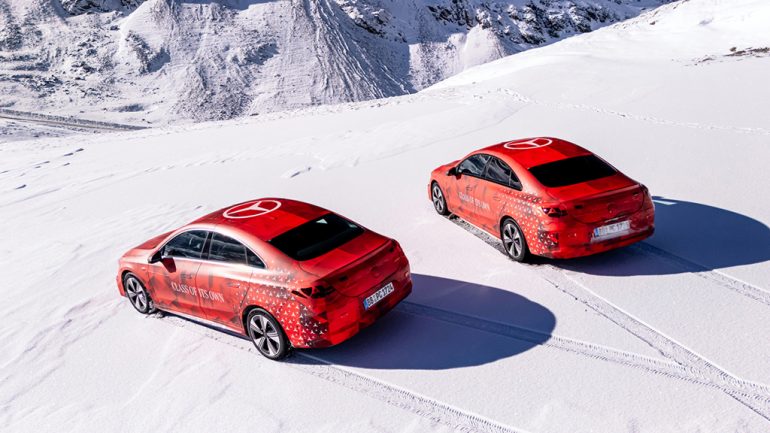
The automotive {industry} is experiencing a pivotal shift, with Mercedes-Benz changing into the most recent main participant to recalibrate its technique amid evolving world market dynamics. In a transfer that indicators a broader industry-wide recalibration, the German luxurious automaker introduced a renewed concentrate on combustion engine automobiles whereas conserving electrical automobile (EV) growth in its sights. This balancing act displays a rising sentiment throughout the sector as carmakers adapt to financial pressures, fluctuating client demand, and altering political landscapes—significantly below the brand new U.S. administration.
Mercedes-Benz’s Strategic Reset: Extra Engines, Fewer Guarantees
On February 20, Mercedes-Benz revealed plans to launch 19 new combustion engine fashions alongside 17 battery-electric automobiles by 2027. This pivot underscores a rising realization that the {industry}’s transition to electrical energy could require extra time and adaptability than initially anticipated. The shift comes after Mercedes-Benz skilled a big decline in EV gross sales—down by 1 / 4 in 2023—whereas its combustion fashions continued to drive the majority of its income.
The automaker additionally introduced aggressive cost-cutting measures, together with a ten% discount in manufacturing prices by 2027 and a 20% minimize by 2030. With earnings anticipated to drop additional in 2025 following a 30% hunch final 12 months, Mercedes-Benz is seeking to protect profitability by doubling down on its high-margin, top-end combustion fashions.
“We aren’t abandoning our value-over-volume technique,” CFO Harald Wilhelm reassured traders, emphasizing that conventional combustion engine vehicles stay a vital revenue driver.
A Broader Shift within the Business’s Pondering
Whereas Mercedes-Benz’s technique would possibly look like a retreat from electrification, it mirrors a broader recalibration occurring throughout the worldwide automotive panorama. Automakers are more and more recognizing that the street to an all-electric future is extra complicated than anticipated. Financial uncertainties, provide chain challenges, and uneven charging infrastructure have all tempered the as soon as fast push towards EVs.
Including to the complexity is the political panorama in america. The Biden administration had championed electrification with tax incentives and environmental mandates, however with president Trump’s latest strikes, the {industry} is bracing for potential shifts. Trump has criticized electrical automobile insurance policies and threatened tariffs on imported vehicles, prompting producers like Mercedes-Benz to localize manufacturing in China and the U.S. to hedge towards commerce uncertainties.
This political uncertainty has prompted automakers to hedge their bets. At the same time as manufacturers like Ford, Common Motors, and Volkswagen proceed investing closely in electrical platforms, they’re concurrently revisiting their inner combustion engine (ICE) lineups. Shoppers, particularly in key markets like North America, proceed to favor gasoline-powered SUVs and vans, driving residence the necessity for a dual-track strategy.
Balancing Innovation and Actuality
Mercedes-Benz’s transfer shouldn’t be an abandonment of electrification however reasonably a recalibration. The corporate’s plan to introduce 17 new electrical fashions by 2027 indicators that it stays dedicated to future EV progress. Nonetheless, the automaker is adopting a extra pragmatic stance, acknowledging that profitability and buyer demand nonetheless closely favor combustion fashions—significantly within the luxurious section.
This pragmatic strategy is more and more changing into the {industry} norm. Ford lately delayed the manufacturing of some electrical vans, whereas Common Motors scaled again its EV manufacturing targets. Even Tesla, the worldwide EV chief, has proven indicators of slowing progress, going through rising competitors from Chinese language manufacturers like BYD and mounting stress to chop costs.
China and the Premium Market Squeeze
For Mercedes-Benz, China stays a important battleground. The corporate’s efficiency within the area fell brief in comparison with rivals, with BMW outperforming because of stronger EV gross sales. Mercedes-Benz goals to regain its footing with out participating in what CTO Markus Schaefer known as “irrational” value wars—a reference to aggressive value cuts by Tesla and home Chinese language automakers.
The posh section additionally faces headwinds. Whereas Mercedes-Benz continues to prioritize high-margin, low-volume gross sales, the technique has come below scrutiny as financial uncertainties weigh on premium automotive patrons. Buyers are watching intently to see whether or not this strategy can climate the storm or if changes shall be needed.
What Lies Forward
Mercedes-Benz’s recalibration shouldn’t be an remoted occasion however a part of a broader {industry} development. Automakers are navigating a fragile balancing act: advancing towards electrification whereas guaranteeing that their combustion engine choices stay strong and worthwhile. The shift highlights the complexities of the transition—removed from a straight path, it’s a winding street formed by client preferences, geopolitical tensions, and financial realities.
For customers, this implies extra selection within the coming years. Whether or not you favor the basic roar of a high-performance V8 or the silent rush of an electrical luxurious sedan, automakers like Mercedes-Benz are guaranteeing that each choices stay firmly on the desk. The way forward for driving will possible be a mix of each worlds—the place combustion and electrical coexist, at the very least for the foreseeable future.
As the worldwide automotive {industry} recalibrates, Mercedes-Benz’s technique displays a broader actuality: the combustion engine shouldn’t be fading into obscurity simply but. With the U.S. political panorama doubtlessly shifting and world market pressures mounting, automakers are hedging their bets—embracing electrification whereas conserving one foot firmly planted of their combustion-powered roots. For now, the way forward for the auto {industry} shouldn’t be electrical or combustion—it’s each.