
One great thing about cars is that you can enjoy them in tons of different ways. And for those of us who are constantly seeking an engaging driving experience, the Honda S2000 is right up there with some of the world’s most loved analog sports cars.
To many fans, it’s not a case of if, but when they will be able to own this little bit of motoring history. But which version is best, and how can you tell them apart? We do a deep dive into the intricacies of the S2000, so you can start searching for the version that will put the biggest smile on your dial.
All pricing and vehicle data were from reputable sources. Prices for all models are based on existing vehicles currently for sale.
The Honda S2000

|
Model Years |
1999-2009 |
|
Engine |
2.0-2.2-liter inline-four |
|
Power |
237 hp |
|
Torque |
153-162 lb-ft |
|
Transmission Options |
6-speed manual |
|
Drivetrain layout |
RWD + LSD |
The S2000 was Honda’s 50th birthday gift to itself, and it certainly was a gift that kept on giving. The S in its name stood for Sports, and it followed on from the S800 roadster built in the 1960s. When the S2000 was launched in 1999, Mazda had been making the MX-5 Miata for 10 years, and BMW, Porsche, Audi, and even Mercedes-Benz had all already released their own sporty roadsters.

What the S2000 needed was a unique selling point (USP) to separate it out from this rather crowded market. It came in the form of an engine that had been fettled by Honda’s engineers to deliver the highest specific output of any production motor. Displacing just 2.0 liters, the F20C inline-four made 237 hp at 7,800 rpm, and redlined at a motorbike-like 8,800 rpm, with a fuel cut-out at 9,000rpm. The V-Tec valvetrain allowed for very aggressive valve timing at higher revs, which helped make the S2000 quicker than any other naturally aspirated 2.0-liter car on the road, as well as some far larger displacement rivals.

What it lacked was low-down torque, with its 153-lb-ft peak only arriving at 7,500 rpm. That meant you had to keep the revs way up for decent progress, and this is where the S2000’s second-best feature is to be discovered: its gearshift. The smooth and accurate manual shifter made swapping cogs a pleasure, and it still stands out as one of the best stick shifts fitted to any production car. Some owners have modified their S2000s with turbos and superchargers to deliver way higher torque figures, but this rather defeats the point of a purist sports car like this.

Various updates and mechanical changes were carried out over the 10-year production run, so let’s see just how different each variant is.
Honda S2000 Variants

To the casual observer, all Honda S2000s look largely alike, but there were two distinct versions, as well as a special limited-edition model. So which one should you pick?
The AP1 1999–2003 ($13,000–$59,000)
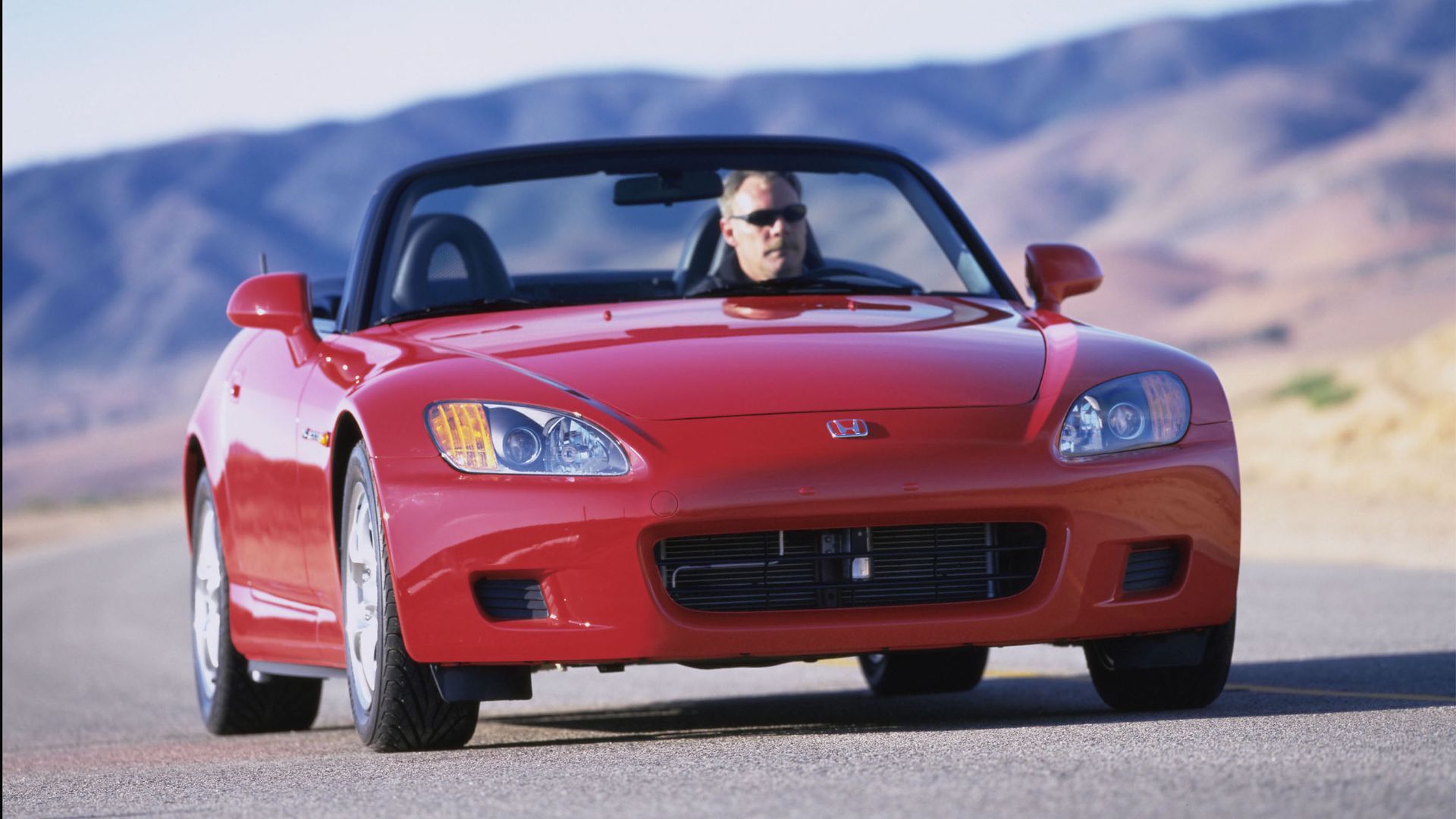
The OG S2000, also called the AP1, was sold from 1999 to 2003. The 2.0-liter inline-four was mounted between the front axle and cabin firewall, making it a front-mid-engine layout. While it had a limited-slip differential as standard, traction control was not available. The double wishbone suspension was set up to make the most of the 50:50 weight distribution, but owners who had more enthusiasm than skill found the car to be tail-happy and unpredictable at the limit.

Honda carried out minor revisions to the suspension in 2002, so later AP1 models are slightly easier to push to the limits of adhesion for the average driver. Other updates over the years included an optional aluminum hardtop, a change from a plastic to a glass rear window for the retractable roof, and minor interior mods.
The AP2 2003–2009 ($14,000–$57,000)

In late 2003, the AP2 model was introduced as a 2004 model year car. The front and rear bumpers were updated, as were the head- and tail-lights. The most obvious visual changes were the move to larger 17-inch wheels and the oval instead of round tailpipes. The suspension system received another makeover, further reducing the tendency to oversteer, thanks to revised shocks, spring settings, and other detail modifications.

This resulted in a more forgiving car, although some still prefer the edgier AP1, so clearly, there is no pleasing everybody. Another big change for the AP2 was the move to a torquier 2.2-liter engine. Peak power remained the same but torque was up nine pound-feet, and available lower down the rev range. The redline was down to 8,000 rpm, and while the drivability and overtaking acceleration were improved, sprint times were unchanged.

The pros and cons of the 2.0 vs 2.2-liter engine are still a hot topic on Honda S2000 forums, and if you have never driven one, we suggest you try before you buy. Compared to modern turbocharged sports cars, the S2000 will always feel a little out of breath unless you have the revs up, so you shouldn’t get too fixated on which engine is the better option.
Electronic throttle control was introduced in 2006, but a more noticeable change was the new traction control system, which was an option from 2006 and standard on all AP2s from 2008 on.
The Club Racer 2008–2009 ($50,000–$80,000)

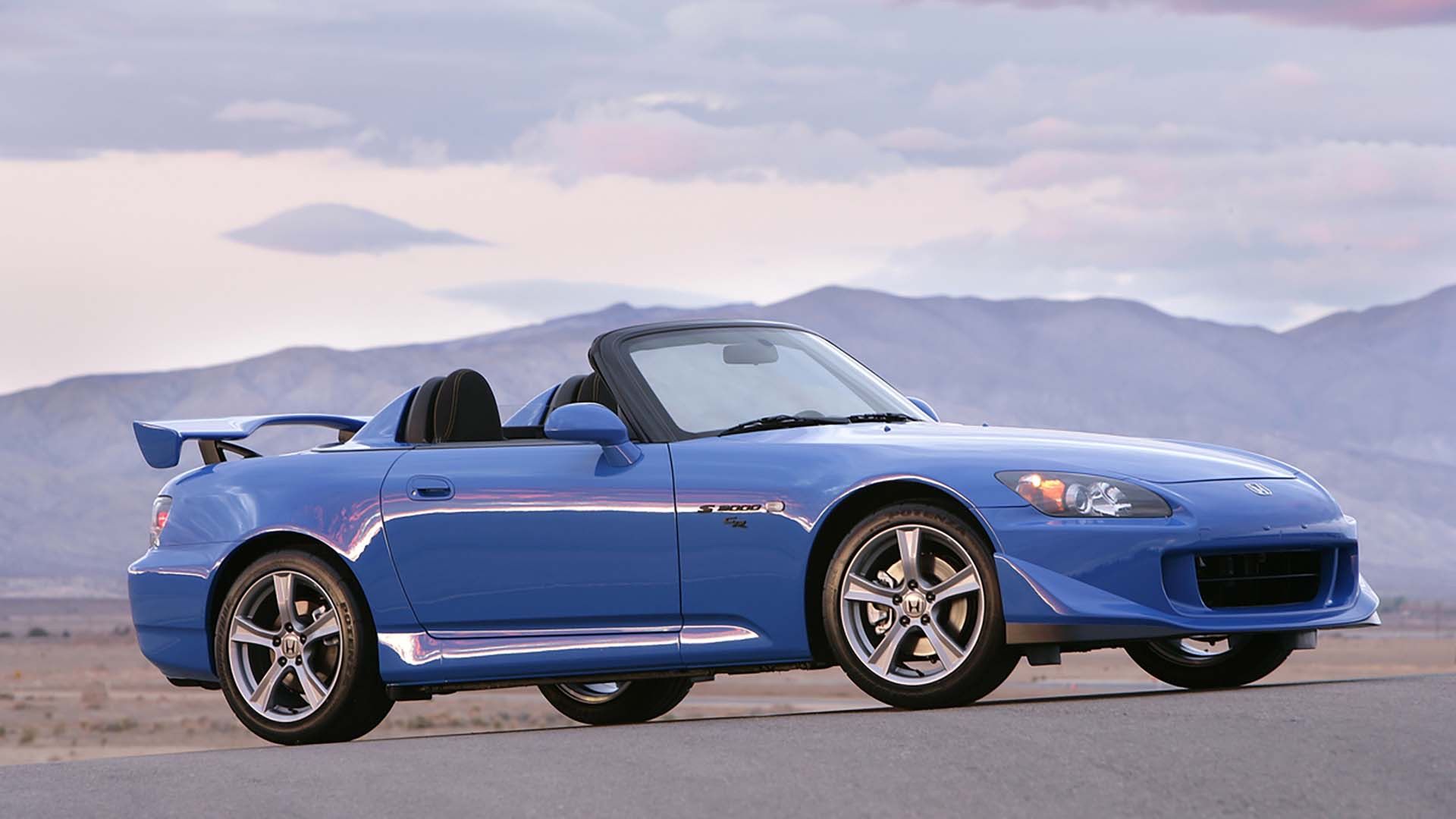
The Club Racer or S2000 CR was based on the AP2, and shared its 2.2-liter engine, but also featured several performance tweaks and weight-cutting measures. The suspension was stiffened up, it had high-performance staggered summer tires, a quicker steering ratio, and a removable aluminum top replaced the electric soft top. To even further reduce weight, the spare tire was replaced with a puncture kit, the audio system and air conditioning became optional items, and there was less sound insulation.

Power outputs remained identical to the AP2, but overall performance was said to be better thanks to the slightly lower overall curb weight and stickier tires. The biggest visual change for the CR was its cartoonish rear wing and other aero add-ons. It is estimated that just 699 were produced, making this the rarest and most valuable S2000 of the lot.
Which One To Buy?

|
Honda S2000 variants |
|||
|
AP1 |
AP2 |
Club Racer |
|
|
Model Years |
1999-2003 |
2003-2009 |
2008-2009 |
|
Engine |
2.0-liter inline-four |
2.2-liter inline-four |
2.2-liter inline-four |
|
Power |
237 hp |
237 hp |
237 hp |
|
Torque |
153 lb-ft |
162 lb-ft |
162 lb-ft |
|
0-60 mph |
5.5–6.0 seconds |
5.5–6.0 seconds |
5.5–6.0 seconds |
|
Average Pricing |
$13,000-$59,000 |
$14,000 – $57,000 |
$50,000 – $80,000 |
|
Number Built |
110,673 |
699 est |
|
Honda S2000 fans have long had their favorite variants, and even though the changes between each one are more evolutionary than revolutionary, they do make for a subtly different driving experience. The earliest AP1 cars are the purest and rawest to drive. You need to know how to handle a rear-wheel drive car if you plan to push it to its limits, but the lack of any driver aids aside from ABS, and the sky-high rev limit of the original 2.0-liter engine make for an intoxicating experience.
Find any S2000 with the optional hardtop, and it becomes more usable in inclement weather, and the later AP2 cars (especially ones with traction control) do feel a bit more planted when pushing on. The engine feels more tractable at lower revs, but still needs to be wrung out to get the best from it. This will appeal to those who aren’t used to old-school manual RWD sports cars, but want to hone their skills without ending up in a ditch if things go slightly wrong.

The S2000 CR is the most focused of the three, but it is also far more expensive. If you want the ultimate collectible S2000, then the CR is the one to get, but it seems a shame to keep it locked up in a garage waiting for the values to rise. Currently, a decent S2000 CR sells for anything between $50,000 and $80,000. Perfect examples have sold for two to three times those prices.
We’d opt for any AP1 or AP2 with a solid service history and get a Honda specialist to set the suspension up just right. Prices for either version are very similar, with low-mileage examples commanding ridiculous sums. It’s best to avoid modified examples, unless the mods have been carried out by a trusted specialist. Stick to a well-kept car with between 60,000 and 100,000 miles on the clock for the best value. These tend to sell for $20,000 to $25,000.
They are all great to drive, especially if you love the idea of an old-school manual sports car that requires skill and finesse to get the best out of it.
Sources: Honda, Classic.com, AutoTempest